CYLAB SECURITY ACADEMY
Learners
From your first CTF to your hundredth, CyLab Security Academy is built for you.
Learn cybersecurity, at your own pace
CyLab Security Academy offers 490+ hands-on challenges across cryptography, forensics, web exploitation, binary exploitation, and more — created by security experts at Carnegie Mellon University.
No experience needed to start. Sign up free and begin solving puzzles today, or browse our resources first to get a feel for what’s here.
Learning paths
Learning paths are curated collections of challenges (sometimes with readings or games) designed to help you learn a particular topic at your own pace.
A few examples of currently-available paths:
- Beginner’s Guide to the Challenge Library: our most approachable problems, touching every challenge category but focused on General Skills.
- Cryptography & Challenge Library Intro: play the PicoLock puzzle game and tackle Caesar Ciphers, RSA, and side-channel attacks.
- Low Level Binary Intro: meet Mochi’s Tale, a videogame that introduces assembly, debuggers, and Python exploitation in a hands-on learning path.
Practice spaces
Open environments for self-paced learning, available year-round.
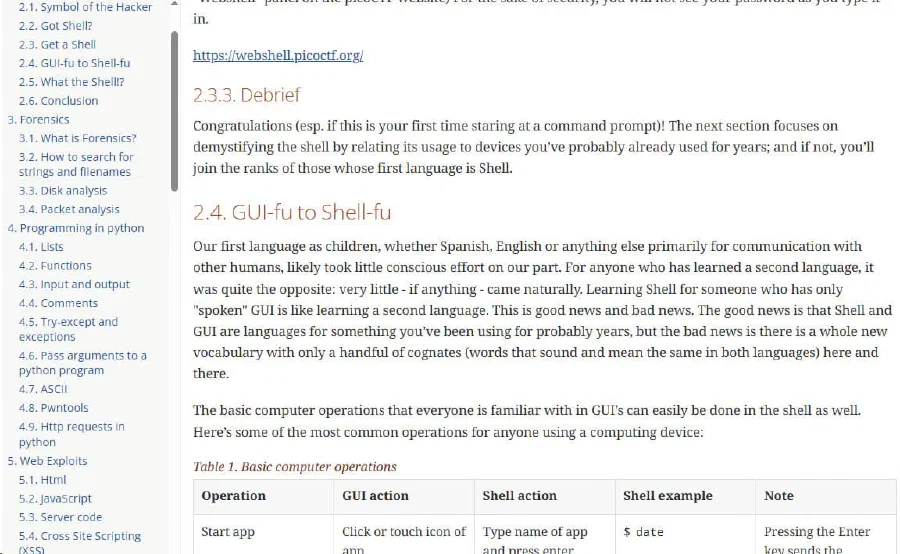
CTF Primer
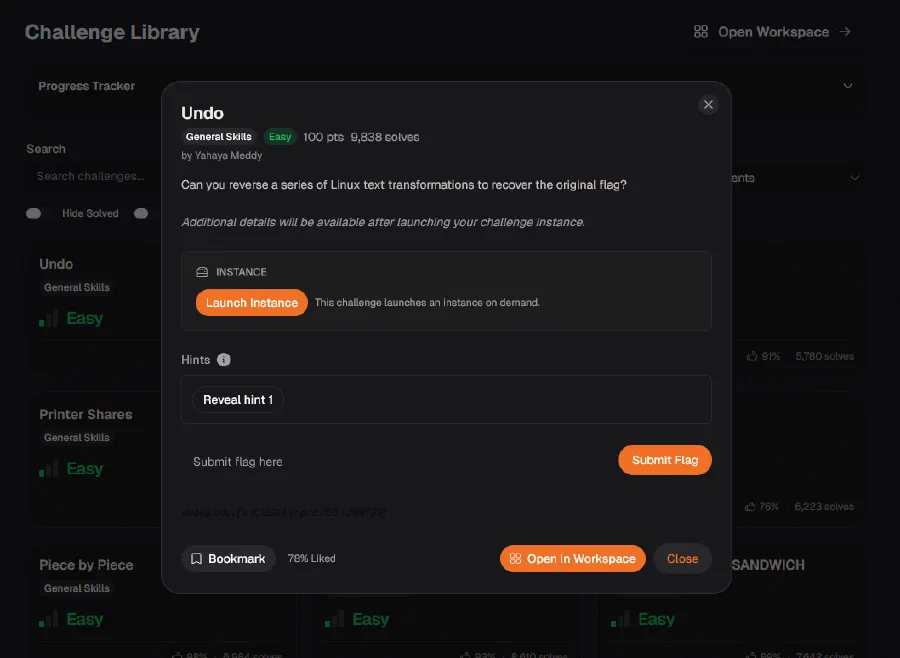
Challenge Library
Video lectures
Carnegie Mellon educators walk through core cybersecurity concepts — the same material we use to train our competition writers and ambassadors.
Get started
Your path forward
Three steps to go from account creation to competing.
Sign up
Learn and practice
Compete
Teams and classrooms
Most learning happens solo, but the platform supports group play too: player-formed teams for competition, and teacher-managed classrooms for school participation.
Forming a team
After registering for a teamplay-enabled competition, the My Team page lets you create or join a team. Share your Team Invite Code with potential teammates. Teams may consist of 1–5 players from different schools. To be eligible for prizes, all players on a team must be eligible — see each scoreboard’s rules.
Joining a classroom
From the Classrooms page, request to join by entering your teacher’s Classroom Invite Code. Your teacher can post Assignments bundling specific challenges and learning paths with due dates, and the classroom scoreboard tracks your progress against your peers. You can join multiple classrooms — one for your CS class, one for your club, one for your school.
General FAQ
What is hacking?
What is a CTF?
What is CyLab Security Academy?
Learner FAQ
What will I need to know to get started?
What software do I need?
What network domains do I need access to?
Many schools and workplaces firewall sites by default. If you’re having trouble loading challenges, ask your network administrator to allowlist these domains:
cylabacademy.org(HTTPS)learn.cylabacademy.org(HTTPS)webshell.cylabacademy.org(HTTPS)artifacts.picoctf.net(HTTPS)
As a college student or non-student, can I play?
How much time do I need?
Do I compete individually or in a team?
Beyond the Academy
Want to go further?
These resources are not affiliated with CyLab Security Academy, but our problem and education developers find them very useful for learners who want to explore beyond the platform:
- Gitbook from Trail of Bits
- CTF Learn
- Capture the Flag 101
- Open Security Training 2
- CyberPatriot — National Youth Cyber Education Program
- Roppers Academy
- Cisco Networking Academy
- Khan Academy — Cybersecurity 101
- NSA Codebreaker
- US Cyber Games
- Cybersecurity Guide
- National Cyber League
- Nightmare - Intro to Binary Exploitation